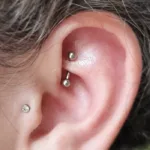
A double helix piercing is one of the most popular cartilage piercing styles—but it’s also one of the most misunderstood. Many people love the layered, minimalist look, yet hesitate because of concerns about pain, long healing times, and complications.
If you’re wondering whether a double helix piercing is right for you, how long it really takes to heal, or how to avoid bumps and infections, you’re in the right place.
This 2026-updated guide breaks down everything you need to know about double helix piercings—from placement and pain level to healing timelines, jewelry choices, and expert aftercare tips—so you can make a confident, informed decision.
Table of Contents
What Is a Double Helix Piercing?
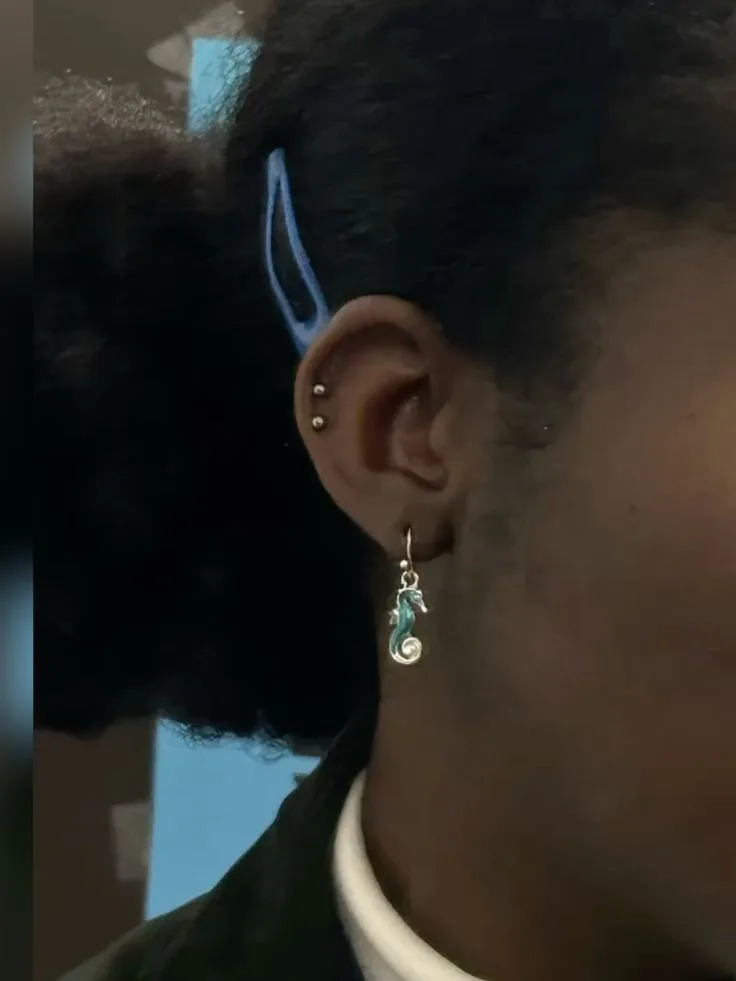
A double helix piercing consists of two piercings placed along the upper outer cartilage of the ear, usually stacked vertically or slightly diagonally. It’s an evolution of the classic helix piercing and is popular for its clean, balanced, and customizable appearance.
Unlike lobe piercings, helix piercings go through cartilage, which affects pain level, healing time, and aftercare requirements.
Double Helix Piercing Placement Explained
Common placement styles:
- Vertical stack (most popular)
- Slight diagonal alignment
- Curated ear stack with other cartilage piercings
Key placement considerations:
- Ear anatomy (not all ears support tight spacing)
- Jewelry size during swelling
- Long-term styling goals
A professional piercer will assess cartilage thickness and spacing before piercing.
Double Helix Piercing Pain Level
Pain rating: ⭐⭐⭐⭐☆ (6.5–7.5 /10)
Since cartilage is pierced twice, the pain is slightly higher than a single helix.
What it feels like:
- Sharp pressure for a few seconds
- Second piercing often feels more intense
- Soreness and throbbing afterward
The pain is brief, but post-piercing swelling is where most discomfort comes from.
Double Helix Piercing Healing Time (Full Timeline)
Average healing time:
👉 6 to 9 months
👉 Full internal healing: up to 12 months
Healing stages:
Weeks 1–2: Initial Healing
- Swelling and redness
- Tenderness and warmth
- Clear lymph discharge (normal)
Weeks 3–6: Early Recovery
- Swelling slowly decreases
- Crust formation around jewelry
- Piercing feels tight some days
Months 2–4: Stabilization
- Less pain, more sensitivity
- Irritation bumps may appear if disturbed
- Still not ready for jewelry changes
Months 6–12: Fully Healed
- No pain or discharge
- Jewelry moves comfortably
- Safe for style changes
Aftercare Tips for a Double Helix Piercing
Proper aftercare is non-negotiable for cartilage piercings.
Daily aftercare routine:
- Clean twice daily with sterile saline
- Gently remove crusts after showering
- Pat dry with disposable paper towel
What to avoid:
- ❌ Touching with dirty hands
- ❌ Sleeping on the pierced side
- ❌ Using alcohol or peroxide
- ❌ Swimming (first 6–8 weeks)
Best Jewelry for Double Helix Piercings
Best materials:
- Implant-grade titanium (best for healing)
- Solid 14k–18k gold
- Niobium
Recommended styles:
- Flat-back labret studs
- Small hoops (after healing)
- Minimal barbells
Avoid heavy or dangling jewelry during healing.
Pros and Cons of a Double Helix Piercing
Pros:
- Stylish layered look
- Highly customizable
- Works with minimalist or bold styles
Cons:
- Longer healing time
- Higher irritation risk than single helix
- Sleeping discomfort early on
Common Problems: Bumps, Swelling & Irritation
Common issues:
- Irritation bumps
- Prolonged swelling
- Redness from pressure
Causes:
- Sleeping on piercing
- Tight jewelry
- Overcleaning
- Hair snagging
Most bumps are not infections and resolve with proper care.
When Can You Change Double Helix Jewelry?
Safest time:
👉 After 6 months, ideally with a professional piercer.
Changing jewelry too early can:
- Restart swelling
- Cause bleeding
- Extend healing time
Double Helix vs Single Helix Piercing
| Feature | Single Helix | Double Helix |
|---|---|---|
| Pain | Moderate | Moderate-High |
| Healing | 4–6 months | 6–9 months |
| Style | Minimal | Layered & bold |
| Risk | Lower | Slightly higher |
Double Helix Piercing FAQs (People Also Ask)
How long does a double helix piercing hurt?
Pain usually lasts 1–2 weeks, with mild soreness after.
Can you sleep on a double helix piercing?
Avoid sleeping on it for at least 6–8 weeks.
Are double helix piercings hard to heal?
They require patience but heal well with proper care.
Can you pierce both holes at once?
Yes, most professionals do both in one session.
Do double helix piercings leave scars?
Minimal scarring if properly cared for.
Is a double helix piercing worth it?
Yes, if you love curated ear styles and can commit to aftercare.
Read Also: Helix Piercing Healing Time: Week-by-Week Guide (2026)
Final Thoughts: Is a Double Helix Piercing Right for You?
A double helix piercing offers the perfect balance between elegance and edge. While healing takes longer than a single piercing, the result is a versatile, timeless look that elevates any ear stack.
If you’re ready to follow aftercare guidelines and give your piercing time to heal, a double helix can be one of the most rewarding cartilage piercings you’ll ever get.
👉 Explore our other piercing guides to build a safe, stylish, and well-planned ear setup.