Lip piercings are among the most versatile facial piercings you can get. From subtle studs to bold symmetrical setups, lip piercings allow endless customization. But with so many lip piercing types and names—labret, Medusa, snake bites, Monroe, it can be confusing to know which is which and where each one sits.
Choosing the wrong placement or jewelry can lead to irritation, dental issues, or uneven results. That’s why understanding lip piercing placement and anatomy is essential before committing.
This complete lip piercings guide explains all the major lip piercing types, their names, placement maps, healing expectations, and how to choose the best option for your face. Whether you want a single minimalist stud or a full lip piercing setup, this guide will help you make the right decision.
Table of Contents
What Is a Lip Piercing?
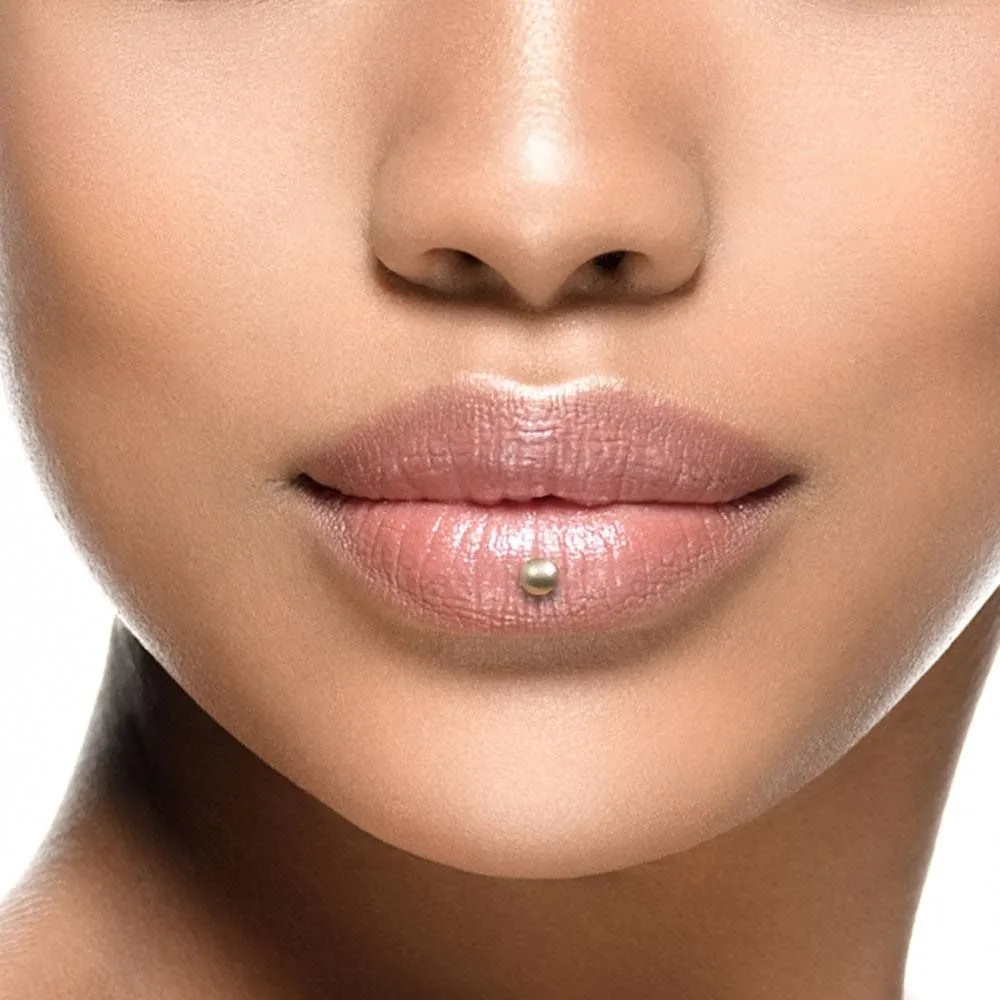
A lip piercing is any piercing placed on or around the lips. Some piercings pass through the lip tissue itself, while others sit above or below the lip line.
Lip piercings typically use:
- Labret studs
- Rings or hoops
- Circular barbells
They are popular because they:
- Suit many face shapes
- Offer symmetrical designs
- Heal relatively quickly
- Allow many jewelry styles
Lip piercings are considered soft-tissue piercings, which means they generally heal faster than cartilage piercings.
Lip Piercing Placement Map Explained
Understanding lip piercing placement helps you visualize where each piercing sits relative to your lips and teeth.
Lip piercings are usually divided into three zones:
Upper Lip Area
Above the top lip and under the nose.
Lip Line Area
Directly through the lip itself.
Lower Lip Area
Below the bottom lip and above the chin.
Each placement affects:
- Appearance
- Healing time
- Jewelry type
- Comfort
- Dental contact
Professional piercers follow safety standards recommended by organizations like the Association of Professional Piercers to ensure proper placement and minimize risks.
Types of Lip Piercings (Names and Locations)
There are many types of lip piercings, but most fall into recognizable categories. Each type has a distinct name based on its placement.
Understanding lip piercing names helps you communicate clearly with your piercer and get the exact look you want.
Upper Lip Piercings
Upper lip piercings are placed above the top lip. They tend to look subtle and elegant.
Medusa Piercing (Philtrum)
The Medusa piercing sits in the center above the upper lip, in the philtrum groove.
Features:
- Centered placement
- Symmetrical look
- Uses labret studs
Pros:
- Very balanced appearance
- Popular choice
- Easy to style
Cons:
- Can contact gums
- Swelling is common initially
Monroe Piercing
The Monroe piercing sits on the upper lip’s left side and mimics a beauty mark.
Features:
- Left side placement
- Small stud jewelry
- Minimalist style
Pros:
- Subtle appearance
- Easy to maintain
Cons:
- Limited jewelry options
- Can irritate gums
Madonna Piercing
The Madonna piercing is similar to the Monroe but placed on the right side.
Features:
- Right side placement
- Stud jewelry
- Balanced look with Monroe
Vertical Philtrum (Jestrum)
This piercing passes vertically through the upper lip.
Features:
- Vertical placement
- Two visible ends
- Curved barbell jewelry
Pros:
- Unique appearance
- No gum contact
Cons:
- More noticeable
- Slightly longer healing
Lower Lip Piercings
Lower lip piercings are the most common type and offer the most variety.
Labret Piercing
The labret piercing sits below the center of the bottom lip.
Features:
- Center placement
- Flat-back jewelry
- Classic style
Pros:
- Popular choice
- Easy to style
- Many jewelry options
Cons:
- May contact teeth
- Requires proper sizing
Vertical Labret
This piercing passes vertically through the bottom lip.
Features:
- Vertical placement
- Two visible ends
- No internal contact
Pros:
- Tooth-safe
- Unique appearance
Cons:
- More visible
- Requires careful healing
Side Labret
A side labret sits slightly off-center below the lip.
Features:
- Off-center placement
- Stud jewelry
- Asymmetrical style
Multiple Lip Piercing Combinations
Combination lip piercings create symmetrical or bold looks.
Snake Bites
Snake bites consist of two piercings on either side of the lower lip.
Features:
- Symmetrical placement
- Studs or rings
- Popular style
Pros:
- Balanced appearance
- Customizable
Cons:
- More aftercare
- Higher swelling
Spider Bites
Spider bites are two piercings placed close together on one side.
Features:
- Close placement
- Side location
- Compact look
Dolphin Bites
Dolphin bites sit close together in the center below the lip.
Features:
- Center placement
- Double studs
- Unique style
Angel Bites
Angel bites include two upper lip piercings on both sides.
Features:
- Upper lip placement
- Symmetrical
- Stud jewelry
Cyber Bites
Cyber bites combine a Medusa and a labret.
Features:
- Vertical symmetry
- Bold appearance
- Balanced look
Choosing the Right Lip Piercing
Choosing the right lip piercing depends on several factors.
Face Shape
Different placements suit different face shapes.
Round Faces
- Vertical labret
- Medusa
- Side labret
Oval Faces
- Most styles work well
Angular Faces
- Snake bites
- Labret
- Monroe
Lifestyle
Consider:
- Work environment
- Sports activities
- Makeup routine
- Oral hygiene habits
Pain Tolerance
Pain varies by placement:
Low pain:
- Labret
- Monroe
Moderate pain:
- Medusa
- Snake bites
Higher pain:
- Vertical labret
- Jestrum
Jewelry Types for Lip Piercings
Choosing the right jewelry improves healing and comfort.
Labret Studs
Most common jewelry type.
Features:
- Flat back
- Secure fit
- Comfortable
Hoops and Rings
Popular for healed piercings.
Features:
- Stylish
- Visible
- Flexible
Circular Barbells
Used for:
- Vertical labrets
- Jestrums
Recommended Materials
Safe materials include:
- Implant-grade titanium
- Surgical steel
- 14k gold
- Biocompatible plastics
Healing Time and Pain Levels
Lip piercings heal faster than cartilage piercings but still require care.
Average Healing Times
- Labret: 6–8 weeks
- Monroe: 6–8 weeks
- Medusa: 8–10 weeks
- Vertical labret: 8–10 weeks
- Snake bites: 8–12 weeks
Healing depends on:
- Aftercare
- Jewelry quality
- Placement
- Health
Pros and Cons of Lip Piercings
Pros
- Stylish appearance
- Many options
- Quick healing
- Customizable
- Popular trend
Cons
- Swelling
- Dental contact
- Maintenance required
- Possible irritation
- Jewelry restrictions at work
Lip Piercing Aftercare Basics
Aftercare is essential for proper healing.
Cleaning Routine
Clean twice daily using:
- Sterile saline solution
- Clean gauze
Avoid:
- Alcohol
- Peroxide
- Harsh soap
Oral Care Tips
For inner-mouth piercings:
- Use alcohol-free mouthwash
- Brush gently
- Avoid spicy foods initially
Things to Avoid
- Touching jewelry
- Twisting jewelry
- Changing jewelry early
- Smoking excessively
- Playing with jewelry
Common Lip Piercing Mistakes
Avoiding mistakes helps prevent complications.
Choosing Cheap Jewelry
Low-quality jewelry causes irritation.
Poor Placement
Incorrect placement can affect teeth and gums.
Skipping Aftercare
Skipping cleaning delays healing.
Changing Jewelry Too Soon
Premature changes restart healing.
FAQ – People Also Ask
What is the most popular lip piercing?
The labret piercing is the most popular due to its central placement and versatility.
Do lip piercings damage teeth?
They can if jewelry rubs against teeth or gums. Proper placement reduces risk.
Which lip piercing hurts the least?
Labret and Monroe piercings are usually the least painful.
How long do lip piercings take to heal?
Most lip piercings heal in 6–10 weeks, though full healing may take longer.
Can you get multiple lip piercings at once?
Yes, but healing may take longer and require more care.
When can I change lip jewelry?
Usually after 6–8 weeks, depending on healing progress.
Are lip piercings safe?
Yes, when performed by a professional and cared for properly.
Read Also Eyebrow Piercing Healing Time: How Long It Takes and Aftercare
Conclusion
Lip piercings offer one of the most customizable piercing experiences available. Whether you want a subtle Monroe, a bold vertical labret, or symmetrical snake bites, there’s a placement to match your style.
Understanding lip piercing types, names, and placements helps you choose confidently and communicate clearly with your piercer. With the right jewelry and proper aftercare, most lip piercings heal smoothly and look great for years.
If you’re considering a lip piercing, start by choosing a placement that fits your anatomy and lifestyle. Then work with a professional piercer to ensure safe placement and proper healing.
Ready to plan your next piercing? Save this guide and use it as your reference for choosing the perfect lip piercing style.