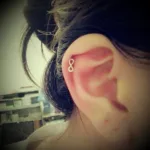
Conch piercings are bold, elegant, and incredibly versatile, but when it comes to healing time, they’re often misunderstood. Many people are surprised to learn that inner conch and outer conch piercings heal differently, even though they’re located in the same area of the ear.
If you’re wondering how long a conch piercing takes to heal, or whether inner conch heals faster than outer conch, this 2026-updated guide has you covered.
In this article, you’ll find a clear comparison, realistic healing timelines, expert aftercare tips, and answers to the most common questions people ask before and after getting a conch piercing.
Table of Contents
What Is a Conch Piercing?

A conch piercing goes through the cartilage in the center of the ear, named after the spiral shape of a conch shell.
There are two main types:
- Inner conch – pierced through the center bowl of the ear
- Outer conch – pierced through the flat cartilage between the helix and anti-helix
Both are cartilage piercings, which means longer healing times compared to earlobes.
Inner vs Outer Conch: What’s the Difference?

Inner Conch Piercing
- Located in the deepest part of the ear
- Usually fitted with a flat-back stud
- Less exposed to friction
Outer Conch Piercing
- Located closer to the outer ear
- Often styled with hoops
- More exposed to hair, masks, and sleeping pressure
📌 These placement differences directly affect healing time and irritation risk.
Conch Piercing Healing Time Overview
| Healing Stage | Time Frame |
|---|---|
| Initial healing | 6–8 weeks |
| Reduced sensitivity | 3–4 months |
| Full healing | 6–12 months |
⚠️ Even if your conch piercing feels fine early on, cartilage healing continues internally for months.
Inner Conch Piercing Healing Timeline
Weeks 1–2: Fresh Piercing
- Swelling and redness
- Pressure sensitivity
- Clear lymph fluid
Weeks 3–6: Early Healing
- Swelling decreases
- Mild soreness remains
- Crusting is normal
Months 2–4: Stabilization Phase
- Less daily discomfort
- Still vulnerable to bumps
- Jewelry should not be changed yet
Months 4–6+: Advanced Healing
- Piercing feels stable
- Downsizing possible
- Full healing may still take up to 12 months
✅ Inner conch piercings often heal slightly faster due to less external friction.
Outer Conch Piercing Healing Timeline
Weeks 1–2: Initial Trauma
- More swelling than inner conch
- Easily irritated
- Sensitive to sleeping pressure
Weeks 3–6: High-Risk Phase
- Irritation bumps may appear
- Hair and masks cause friction
- Hoops may move excessively
Months 2–4: False “Healed” Stage
- Looks healed but isn’t
- Still prone to swelling after pressure
Months 6–12: Full Healing
- Gradual strengthening
- Hoops tolerated better
- True healing completes closer to 12 months
⚠️ Outer conch piercings usually heal slower due to constant movement and pressure.
Inner vs Outer Conch: Healing Comparison
| Factor | Inner Conch | Outer Conch |
|---|---|---|
| Average healing | 6–9 months | 9–12 months |
| Irritation risk | Lower | Higher |
| Jewelry movement | Minimal | Frequent |
| Sleeping discomfort | Moderate | High |
Normal Healing Symptoms vs Warning Signs
Normal Healing
- Clear or whitish fluid
- Mild redness
- Occasional soreness
- Slight warmth
Warning Signs
- Thick yellow/green discharge
- Severe pain after 2 months
- Hot, spreading redness
- Fever or throbbing pain
If symptoms worsen instead of improving, seek professional advice.
Conch Piercing Aftercare Tips
Do This
- Clean twice daily with sterile saline
- Sleep on a donut or travel pillow
- Keep hair away from the piercing
- Wash hands before touching
Avoid This
- Alcohol or hydrogen peroxide
- Twisting the jewelry
- Swimming too early
- Sleeping directly on the piercing
Consistency is the key to smooth healing.
Best Jewelry for Healing a Conch Piercing
Best Materials
- Implant-grade titanium
- Solid 14k–18k gold
- Nickel-free stainless steel
Best Styles for Healing
- Flat-back labret studs (inner conch)
- Straight posts (outer conch early stages)
- Hoops only after advanced healing
Pros & Cons of Conch Piercings
Pros
- Bold yet elegant
- Works with studs or hoops
- Great centerpiece piercing
Cons
- Long healing time
- Sensitive to pressure
- Requires disciplined aftercare
FAQs: People Also Ask
Does inner or outer conch hurt more?
Outer conch usually feels more painful due to thicker cartilage and pressure exposure.
Which conch piercing heals faster?
Inner conch piercings typically heal faster.
When can I change my conch jewelry?
Safest after 3–4 months, preferably with professional downsizing.
Can I sleep on my conch piercing?
Avoid sleeping on it for at least 2–3 months.
Why is my conch piercing still sore after months?
Cartilage heals slowly; mild soreness can be normal up to 6 months.
Are conch piercings hard to heal?
They require patience but heal well with proper care.
Final Thoughts: Inner vs Outer Conch Healing
A conch piercing is a statement piece, but healing it properly requires understanding the difference between inner and outer conch placements.
If you want:
- Faster healing → Inner conch
- Bold hoop look → Outer conch (with patience)
👉 Take your time, choose the right jewelry, and don’t rush healing.
A well-healed conch piercing will last a lifetime.